My journey to Chablis: cool climate, pure expression
Wine travelsChablis, France
I tasted my way through seven Chablis cellars and learned how a few metres of slope, from windy Petit Chablis plateaus to the grand cru amphitheatre, change the glass.
Before this trip, Chablis was already familiar to me through tastings, study notes and plenty of glasses tasted over the years. But visiting in person felt different. I wasn’t arriving with a checklist or expectations. I just wanted to walk the vineyards, taste the wines where they’re made and see if the place itself could explain what Chablis really is. The most important aspect was meeting the people who create these wines.
On this trip, I finally traded the back label for the landscape itself. We arrived with too much excitement and spent a couple of days walking the vineyards, tasting in cellars and wineries and trying to connect the wines we love to the exact folds of hillside they come from.
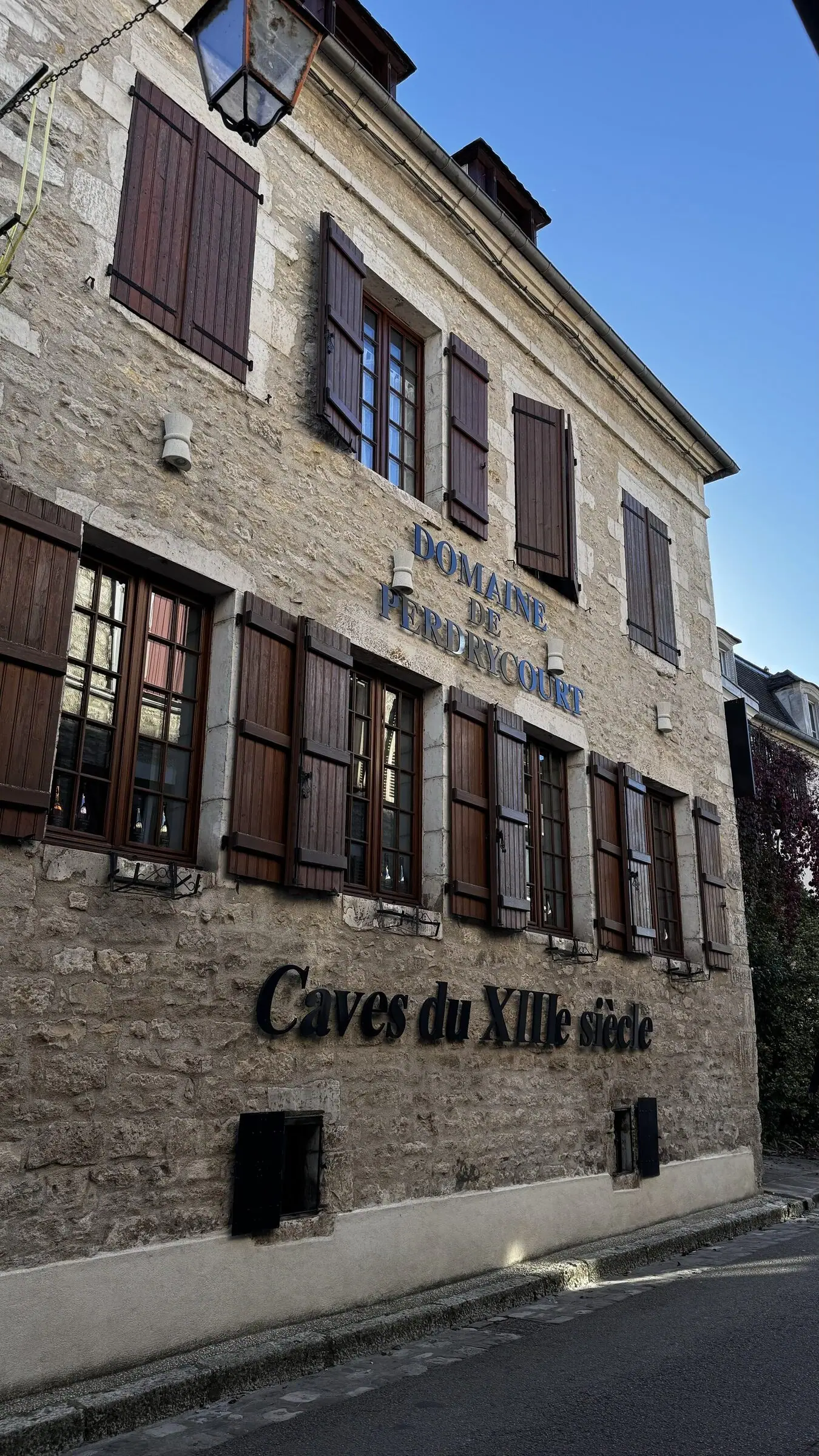
Over those days we tasted at:
- William Fèvre
- Domaine Gueguen
- Marillier Père & Fils (Petit Chablis)
- Vincent Dauvissat
- Domaine Laroche
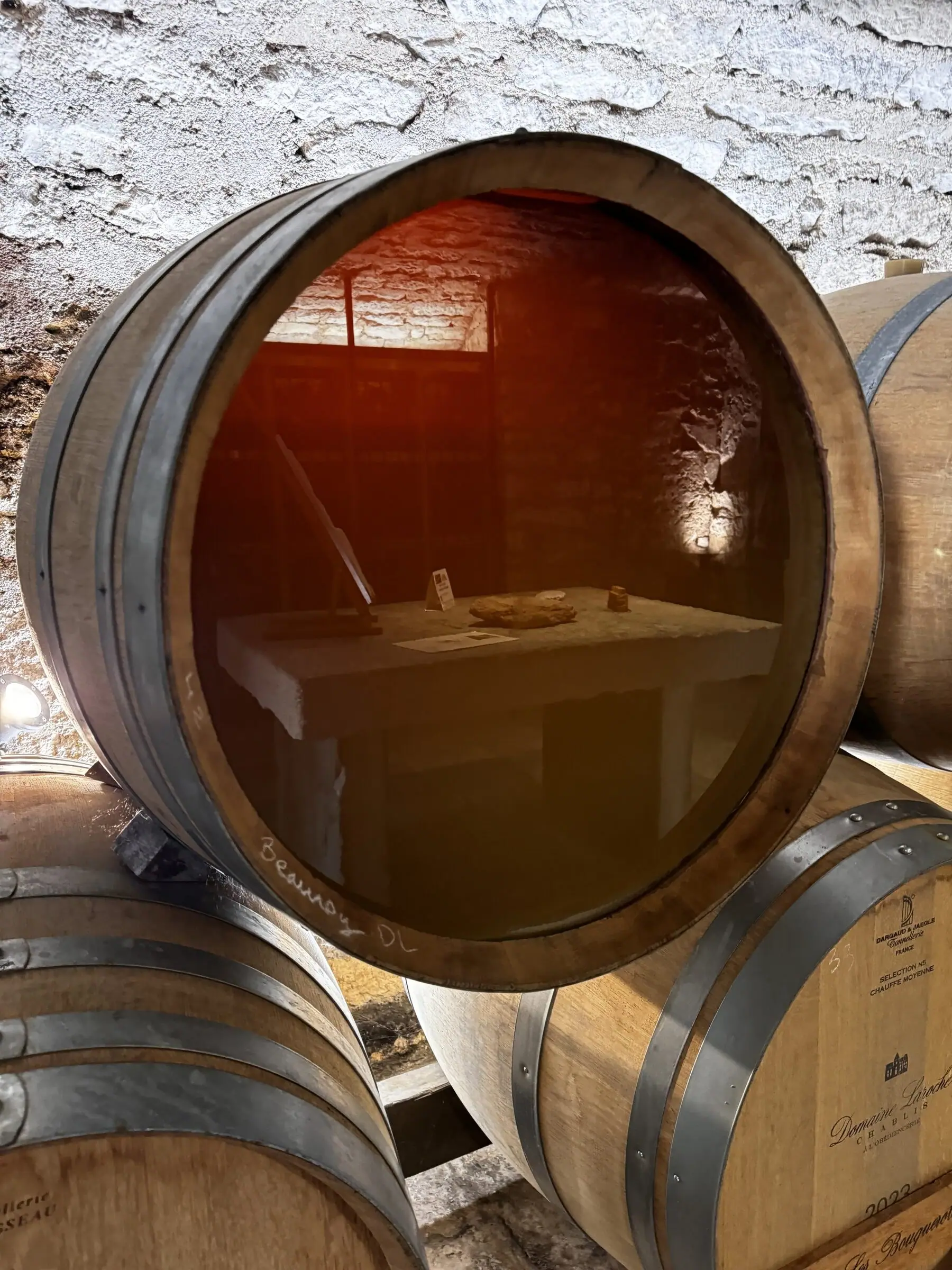
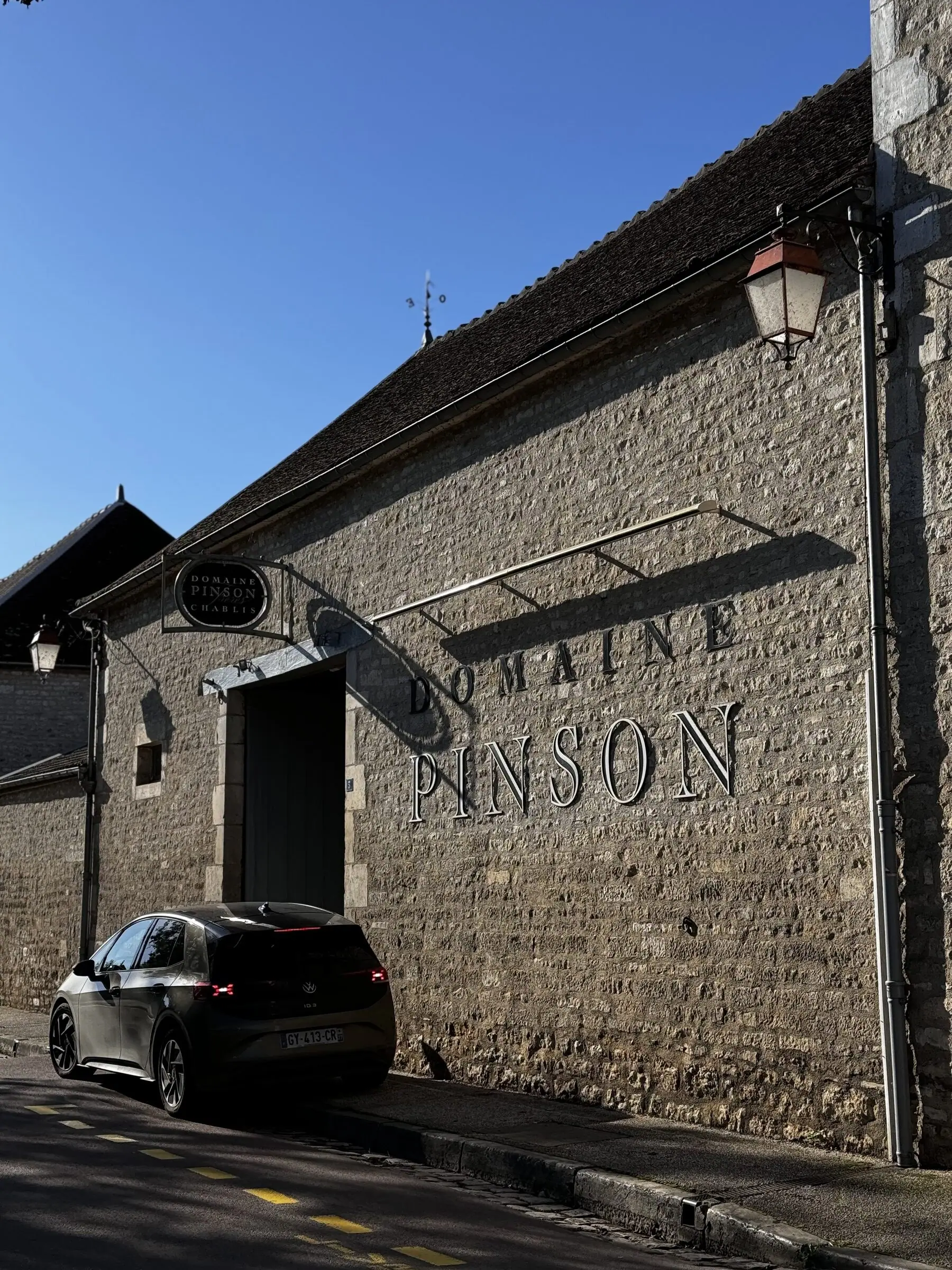
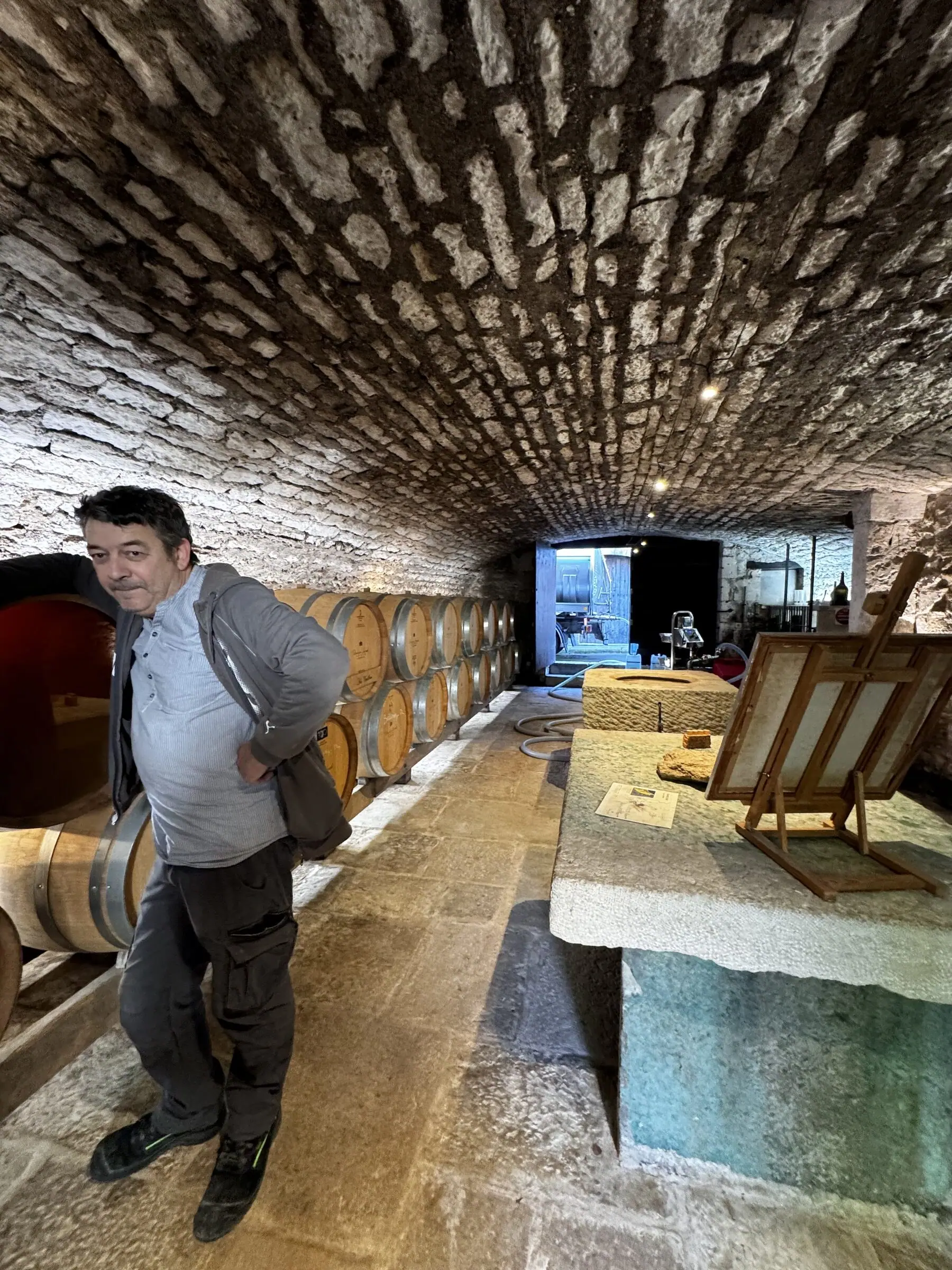
- Domaine Pinson
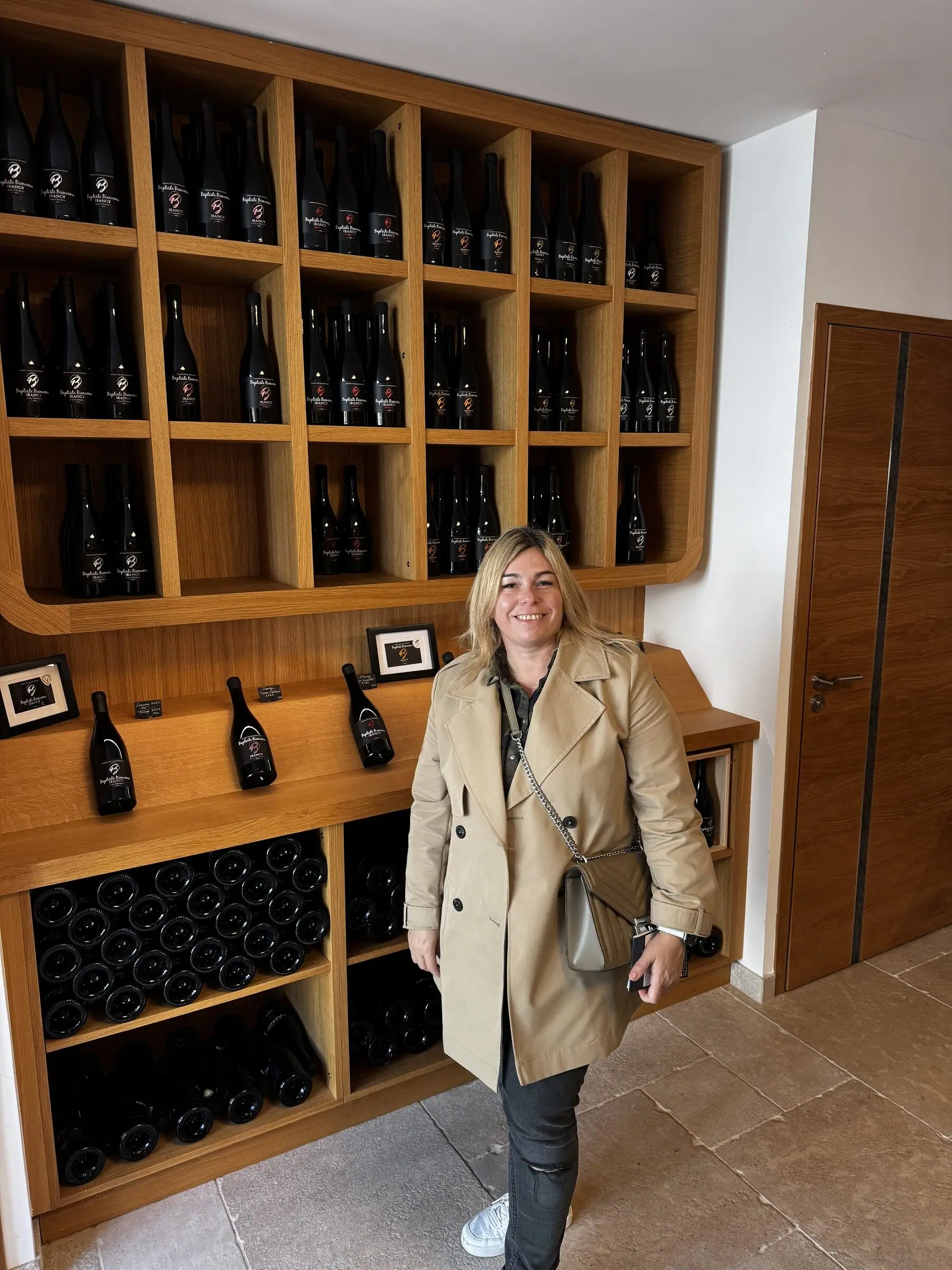
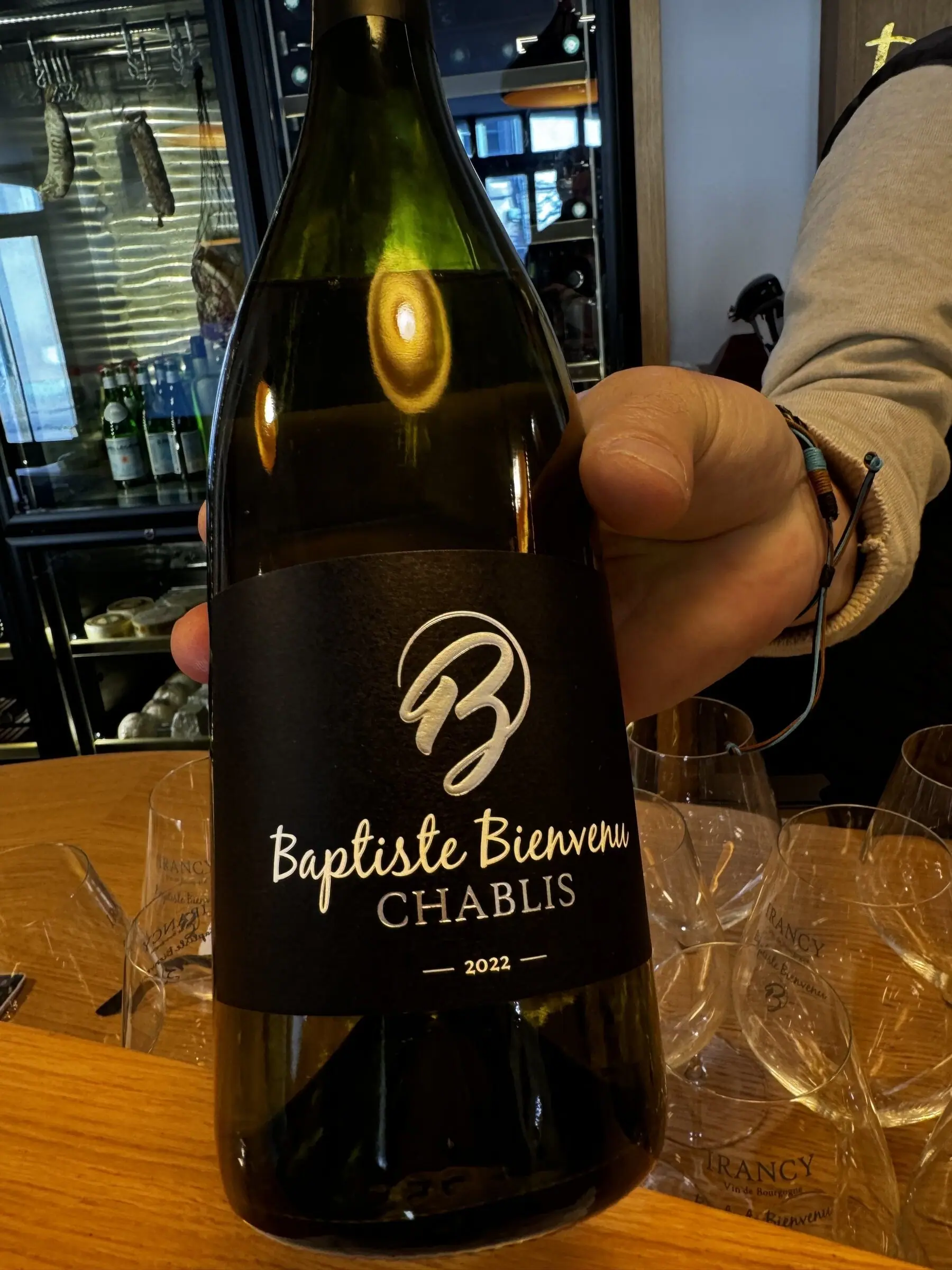
- Baptiste Bienvenu
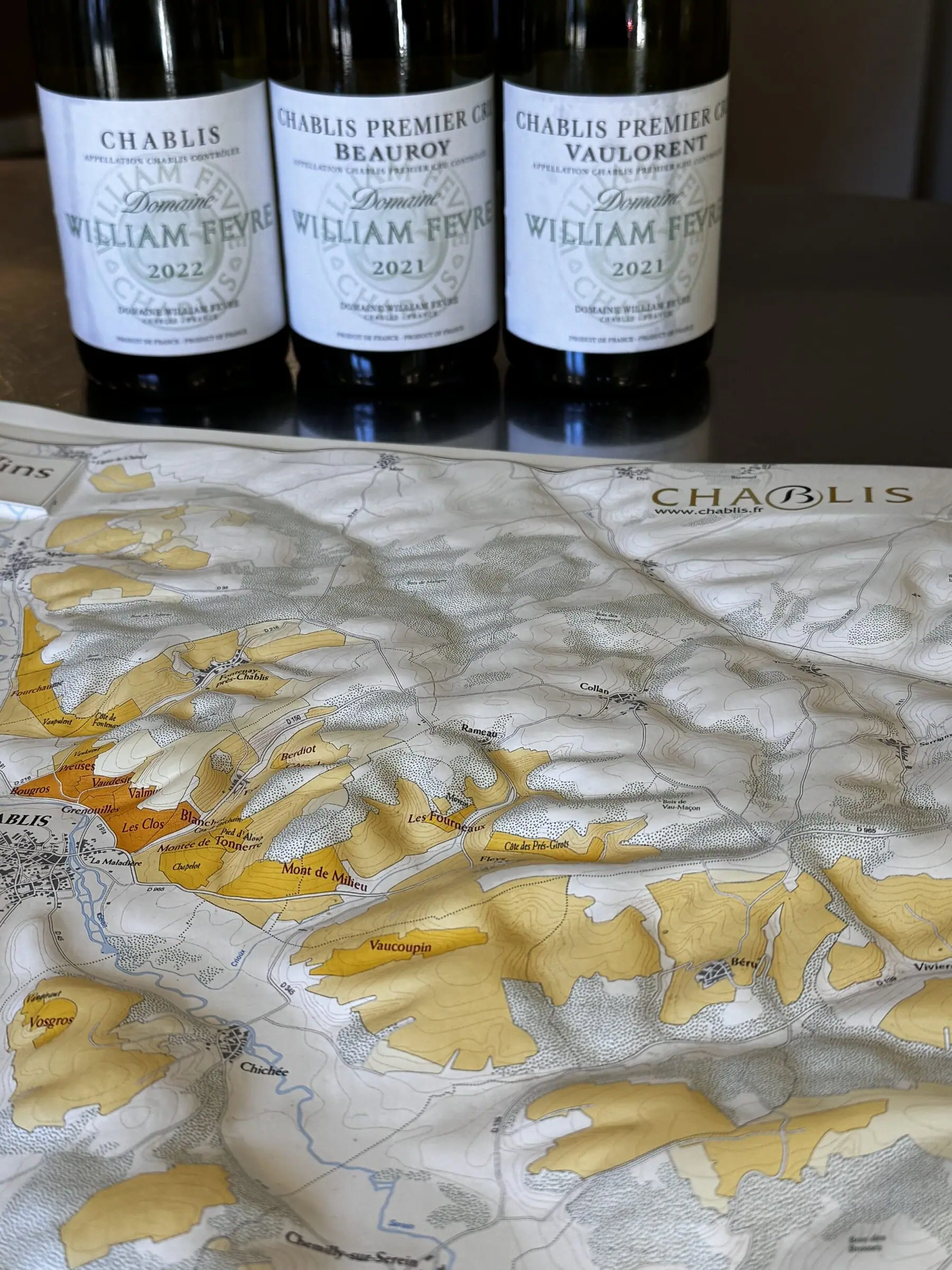
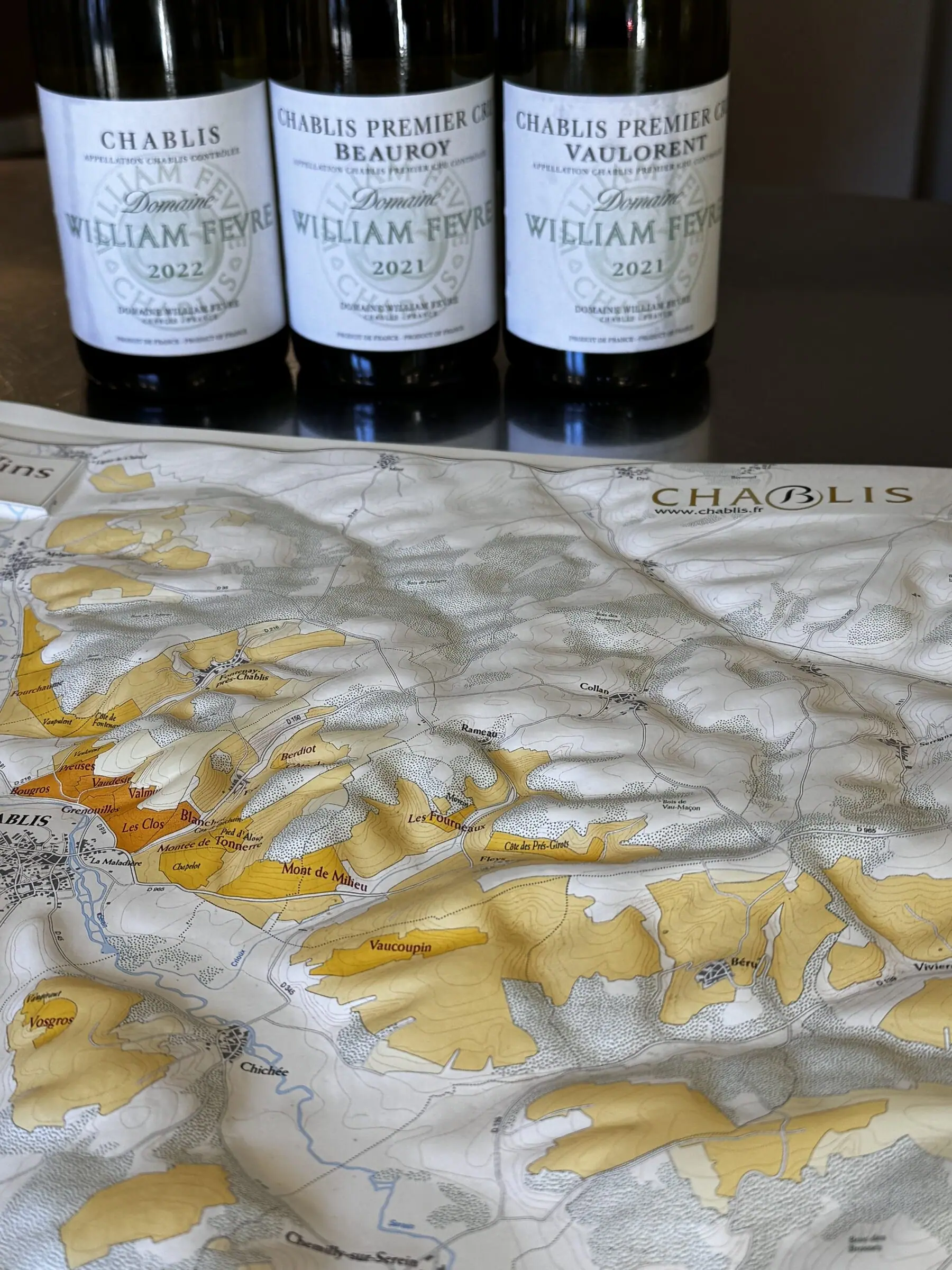
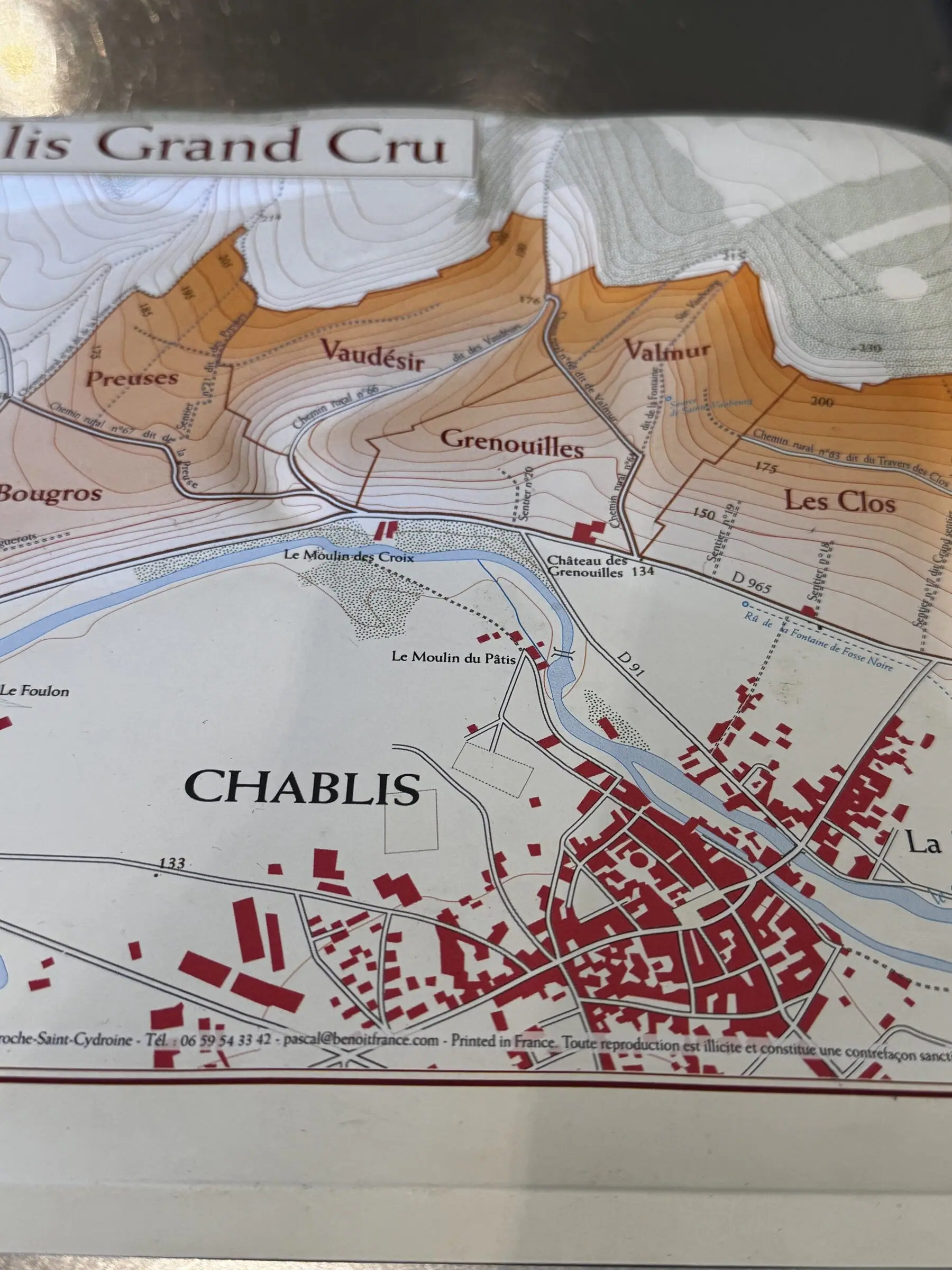
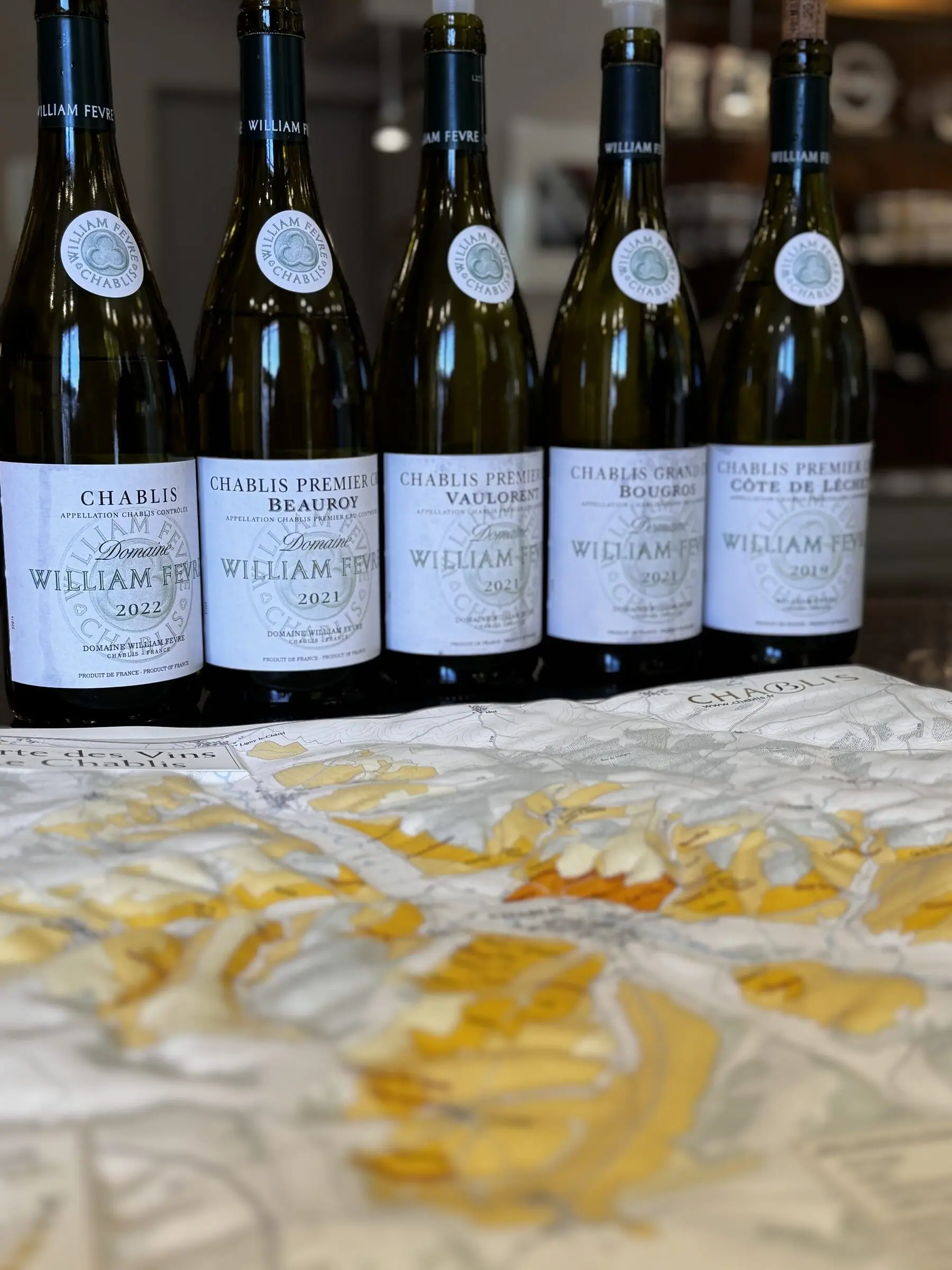
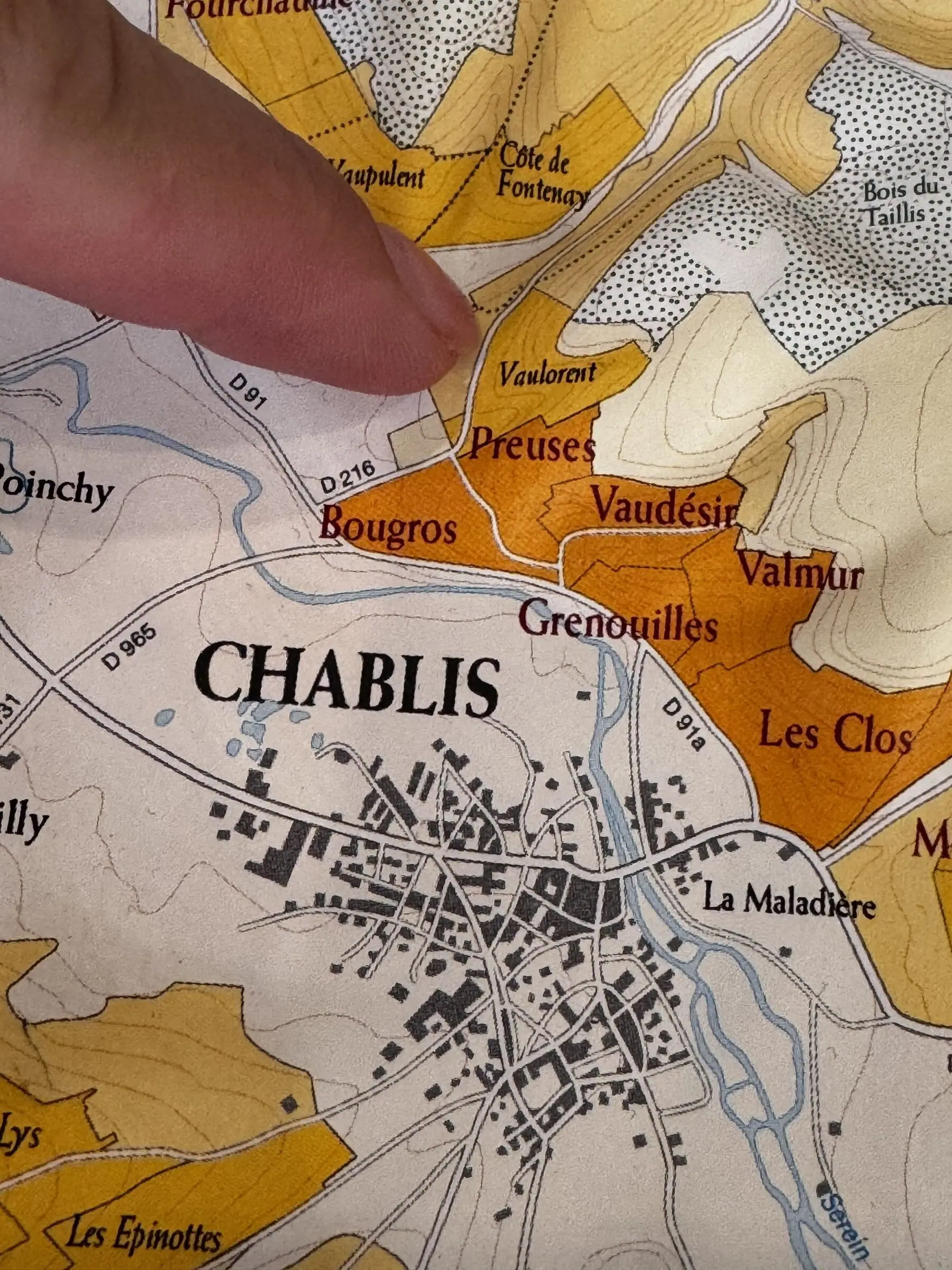
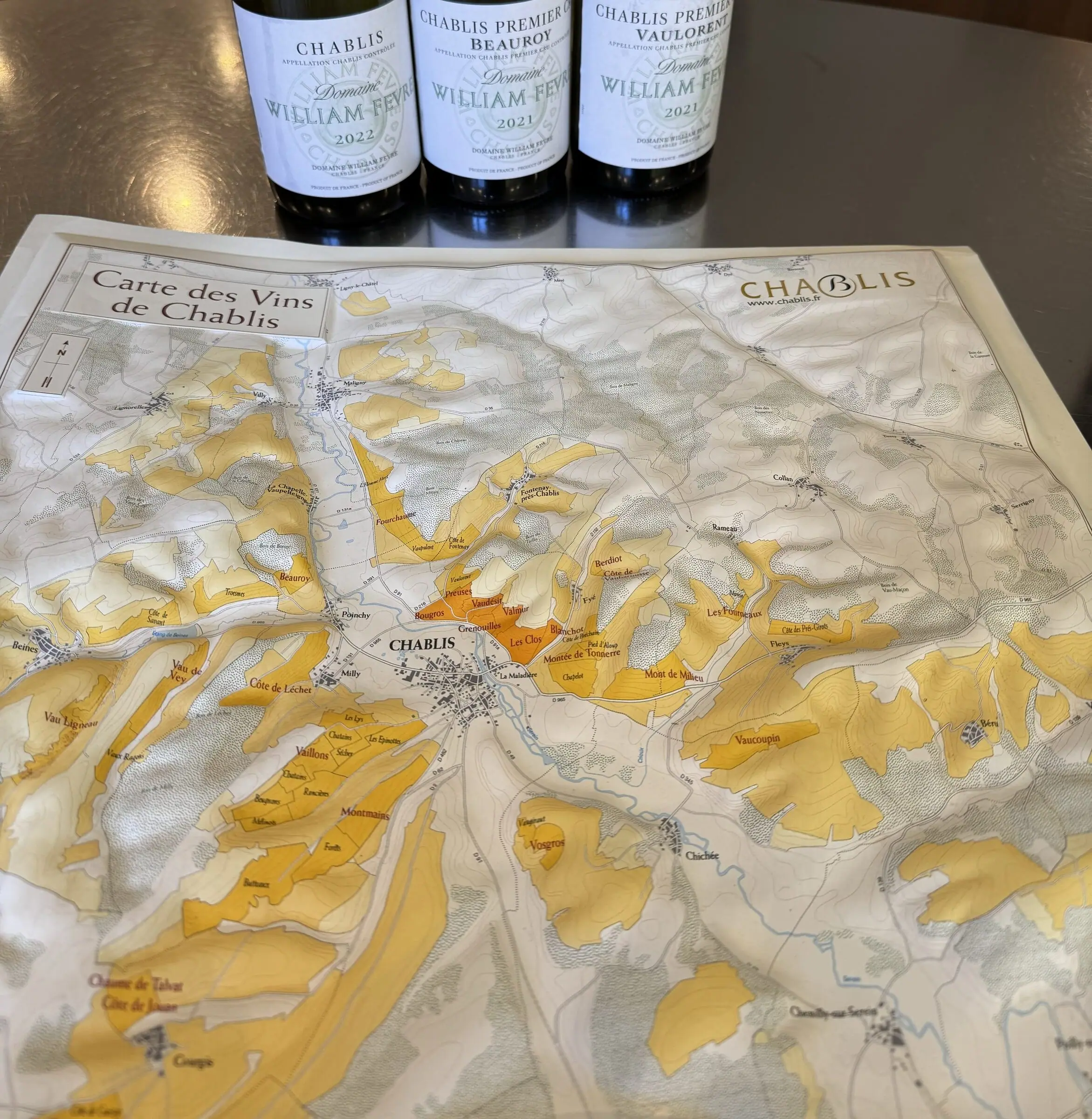
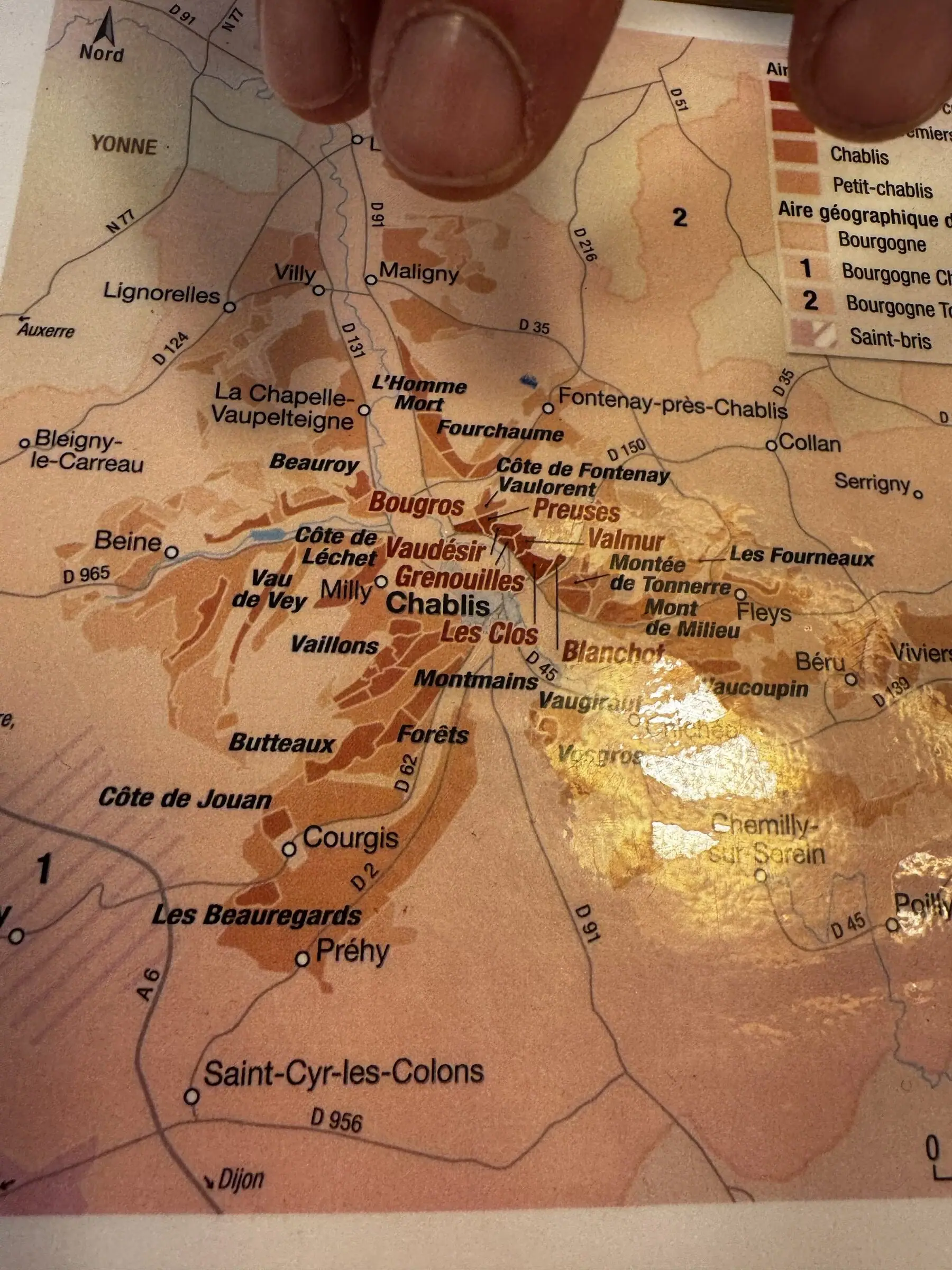
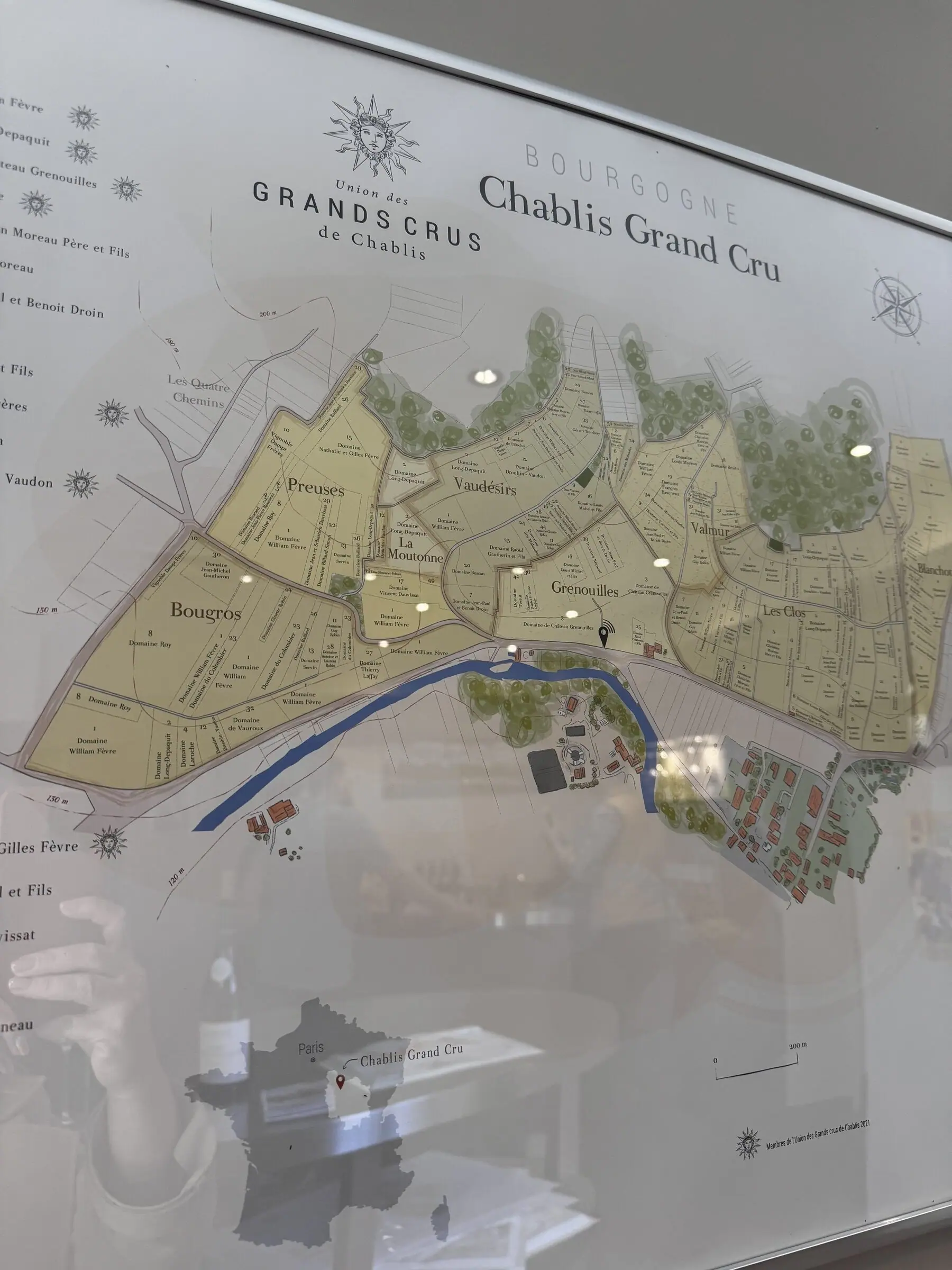
Some visits were planned, some were the result of last‑minute calls and a bit of luck. In every cellar there was a moment where the map and the glass suddenly matched, usually over a premier cru, and almost always in front of a scribbled vineyard diagram pulled from a drawer or tacked to a wall.
At Fèvre’s they had it in 3D, which helps. It was in the premier and, especially, the grand cru sites that everything clicked: the power, the way a few metres of slope or exposure shifts the style of the wine. Below are my notes from the trip, part travel diary, part attempt to pin down what makes these hills so special.
The landscape
Chablis sits in northern Burgundy, closer in climate to Champagne than to the Côte d’Or. What shapes the wines most:
Cool continental climate
- Long, often cold winters (even with snow)
- Spring frost risk (those famous smudge pots and candles in the vineyards)
- Warm but not hot summers
Altitude
- Most quality vineyards are roughly 150–250 m above sea level
- Higher sites and plateaus (often Petit Chablis) are up to around 280–300 m, cooler and windier (which is not great for ripening)
Exposures that really matter
- The best premiers and grands crus tend to face south, south‑west or south‑east, maximising sunlight in this cool region (just as all the wine books say, ha ha)
- Small changes in exposure (more east vs more south) translate into real differences in ripeness and tension
But the soul of Chablis is the rock under your feet.
Kimmeridgian limestone (classic Chablis, premier and grand cru)
- Clay‑limestone with fossilised oyster shells (Exogyra virgula), giving that famous saline, chalky edge
- Holds water but drains well enough to avoid waterlogging
Portlandian limestone (mainly Petit Chablis)
- Younger, harder limestone on the higher plateaus
- Usually gives lighter, more direct wines, ideal for early drinking
Petit Chablis
One of my favourite moments of the trip was standing with a glass of Petit Chablis at Marillier Père & Fils, watching the wind tug at the vines. ‘Petit doesn’t mean simple,’ I was told, ‘it means up there.’
These vineyards often sit on higher, wind‑exposed plateaus on Portlandian limestone. The soils are thinner and rockier, with less clay, and you feel that in the glass with crisp, bright acidity. Citrus and green apple, white flowers. The wines are refreshing, the kind of bottle you open without overthinking, even if they don’t quite have the saline depth of the Kimmeridgian slopes below.
From those plateau vines, looking down towards the amphitheatre of Les Clos and the other grands crus, it’s a step down in altitude but a step up in concentration and depth.
Premier cru Chablis
At domaines like William Fèvre, Gueguen, Laroche, Pinson and Baptiste Bienvenu, the premiers crus were where nuance started to jump out of the glass for me. More than once I found myself tasting two wines side by side, from vineyards a short walk apart, and wondering how a few degrees of slope could make such a difference.
Premier cru vineyards typically sit on steeper mid‑slopes, often between 150–220 m, almost always on Kimmeridgian limestone and facing south‑west to south‑east. A few classic themes emerged in my notebook, even if each domaine has its own mix of sites:
Montée de Tonnerre
- Exposure: south/south‑west, steep, just across the little valley from the grands crus
- Style: often described as ‘baby grand cru’, with tension and depth. Citrus and white flowers, but more weight, a stony core and a long, saline finish
Vaillons
- Warmer, more generous exposure
- Often gave me riper stone fruits and a slightly creamier texture, still anchored by chalky freshness
Montmains / Butteaux / Forêts
- Often slightly cooler expressions
- More linear, mineral, smoky, sometimes with a faintly flinty character
Across these domaines, a few clear personalities stood out:
- William Fèvre: precision and clarity – very clean fruit, sharply etched acidity, and a clear expression of each slope. Their premiers crus felt like a textbook in terroir differences, especially between warmer and cooler exposures.
- Domaine Gueguen: bright, open wines, with inviting fruit on the nose but still a Chablis backbone. Their premiers crus felt like bottles you could open on a Tuesday night and still learn something from.
- Domaine Laroche: a touch more textural richness in some wines, but with Chablis’ signature line of acidity running right through.
- Domaine Pinson & Baptiste Bienvenu: Pinson’s wines showed real density on the palate – a reminder that Chablis can have muscle as well as finesse – while Bienvenu’s had exceptional clarity and energy, with acidity and minerality that felt almost chiselled. Those were the glasses I kept going back to.
Grand cru Chablis
And then there’s the grand cru hill. Standing in front of it for the first time, I finally understood why people call it an amphitheatre: a broad limestone stage curving around the Serein, with vines in every direction you look.
The seven official grands crus are grouped together on the right bank of the river – Les Clos, Vaudésir, Valmur, Les Preuses, Blanchot, Grenouilles and Bougros – and from a distance they look like one continuous slope. Up close, you start to notice all the little changes: a fold in the hill that traps warmth, a slightly cooler hollow, a subtle shift from south‑east to south‑west exposure.
Altitude here generally runs from about 130–250 m, with the grands crus usually occupying the middle to upper parts of the slope – the ‘sweet spot’ where drainage, sun exposure and soil thickness balance. The soils are still Kimmeridgian limestone, but often with slightly deeper topsoils, more fractured rock and better rooting depth. Clay content can lend extra volume and power.
Within each grand cru, individual plots and precise positions matter enormously. Domaines like William Fèvre, Vincent Dauvissat, Laroche and Pinson all have carefully chosen parcels, and their farming and winemaking interpret these sites in different ways. Here’s how they showed in my glass:
Les Clos
- Often regarded as the most complete and powerful grand cru
- Exposure: generally full south/south‑west, with excellent sun and drainage
- Altitude: mid to upper slope, classic grand cru band
- In the glass: structured, dense and built for ageing; citrus and stone fruit with a savoury, almost iodine edge; with time, notes of honey, nuts and complex saline and smoky nuances
Vaudésir
- A bowl‑shaped site with varying exposures, some parcels cooler, some warmer
- In the glass: more perfumed and floral, often a touch more approachable in youth, with a silky texture over a mineral spine
Valmur
- Set in a cool, steep valley that traps cold air and reflects light
- In the glass: mixes power and steely tension – very compact when young, slowly unfolding with air and time
Les Preuses
- Slightly higher and more open towards the west
- In the glass: a little broader and more airy, with subtle, refined minerality
Blanchot
- More south‑east facing, catching early sun
- In the glass: often more delicate and floral, with fine acidity and finesse rather than brute force
Grenouilles & Bougros
- Depending on the exact parcel, can be rounder or more generous, sometimes softer in youth, while still clearly grand cru in depth
Domaines and their grand cru voices
William Fèvre is a key reference point in Chablis, with significant holdings in premiers and grands crus. Tasting there felt almost like sitting in a classroom, except the lesson was in my glass. Les Clos was monumental (layered, with a tight, coiled core), while other grands crus showed distinct personalities: Vaudésir more aromatic, Valmur more linear and laser‑like. There’s weight, but it’s never heavy. The acidity is woven through the wine rather than sitting on top.
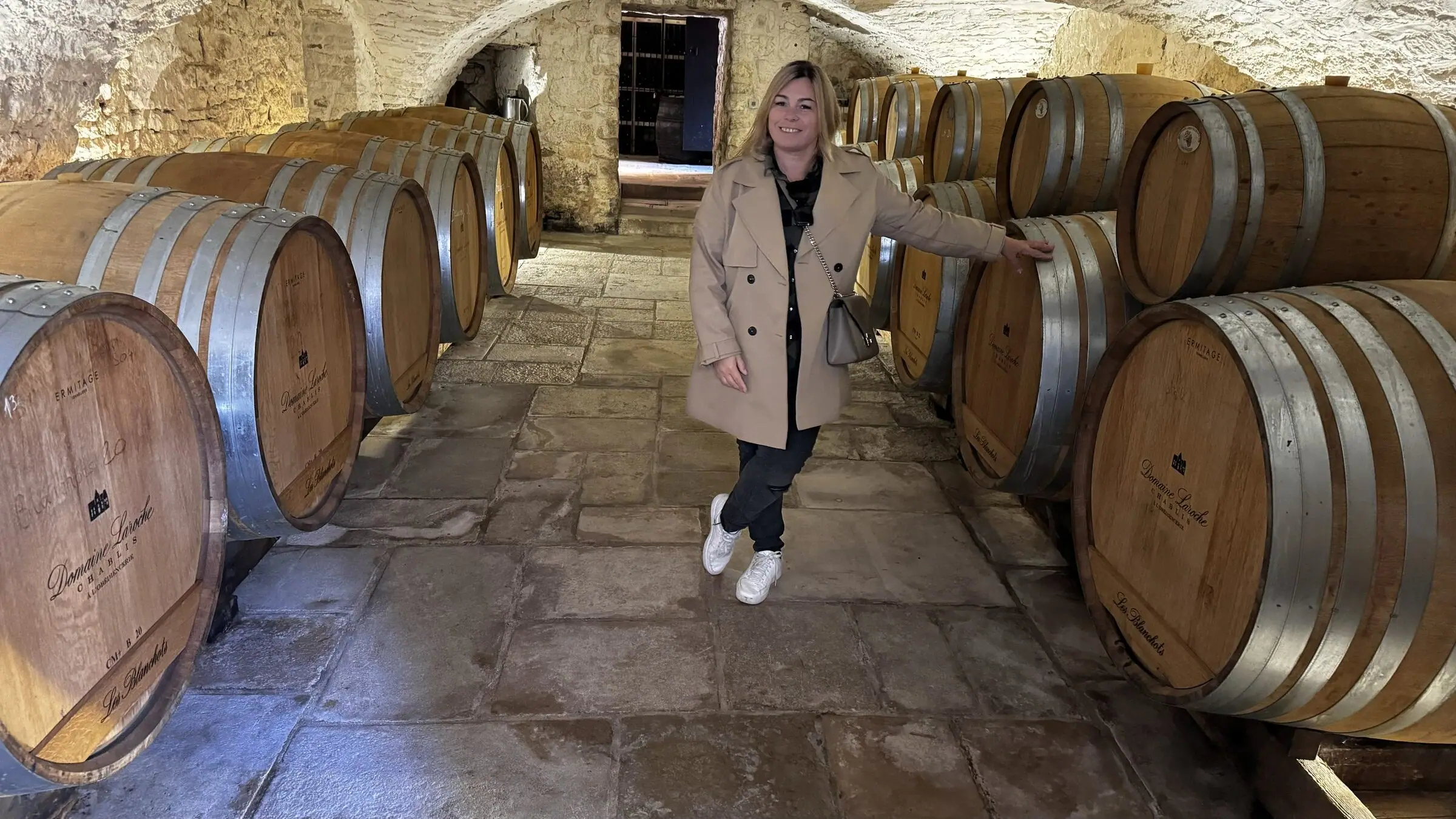
My visit to Vincent Dauvissat felt like stepping into classical Chablis. The cellar was quiet, the barrels neat and unshowy, and the wines in the glass were deeply mineral, often with a hint of smokiness when young, dense yet incredibly focused. The grand cru had an almost architectural structure, with everything in perfect line, but not yet fully revealed. In my notes I underlined one phrase: ‘this will outlive my patience to cellar it.’ With time, these wines gain haunting complexity: sea spray, stone, citrus oil, honey and savoury notes.
Why premier and grand cru Chablis feel so different
By the end of the trip, I could stand in front of a slope and make a decent guess at the style of the wine grown there. A few patterns kept repeating:
Altitude
- Higher Petit Chablis: cooler, more exposed to wind, giving lighter, zippier wines
- Mid‑slope premier and grand cru: more protected, better sun exposure, giving riper fruit and more depth without losing acidity
Slope and drainage
- Steeper slopes shed water and force roots deeper into the limestone, translating into more mineral tension and concentration
Exposure
- South/south‑west: more afternoon heat, giving power and ripeness (Les Clos, parts of Vaudésir, etc.)
- South‑east: earlier sun, slightly cooler afternoons, often bringing more finesse and floral notes (Blanchot, some premiers crus)
Geology
- Kimmeridgian limestone in premiers and grands crus gives the signature saline, chalky finish and a sense of stone at the core of the wine
- Portlandian limestone in Petit Chablis: simpler, honest and very refreshing, but with less depth and salinity
Leaving Chablis
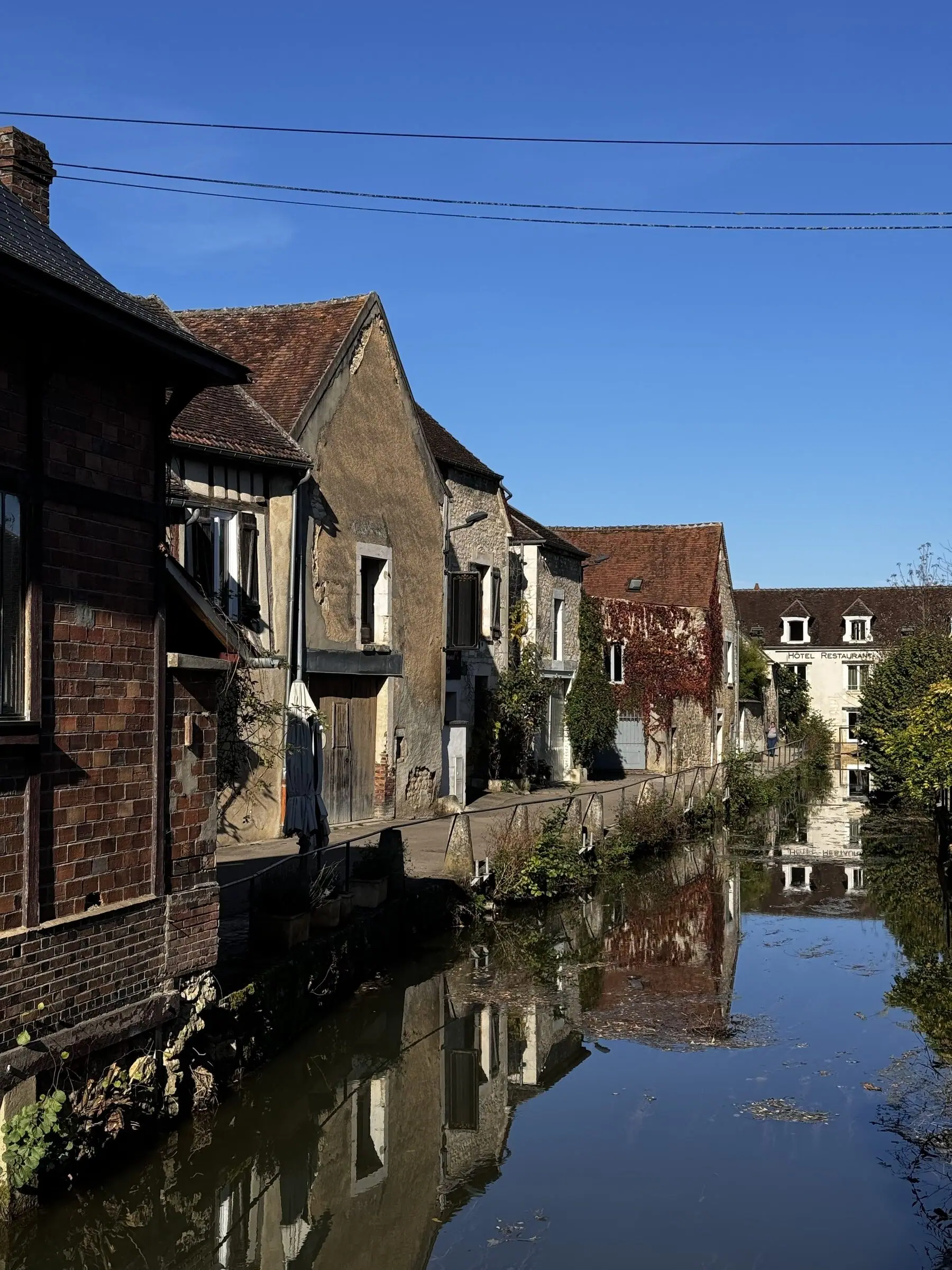
On my last morning in Chablis, I walked up towards the vines one more time without an appointment or a glass in hand, just to see the light on the slopes.
The wines I carried away in my mind came with the view down from the Petit Chablis plateaus, the curve of the grand cru amphitheatre around the Serein, and the quiet of the cool limestone cellars.
The next time I open a bottle from any of these domaines, I’ll be back on those hillsides.